

Can Foreigners Buy Property in Costa Rica? A Complete Guide for International Buyers
Yes. Foreigners can buy property in Costa Rica. In most cases, you do not need to be a Costa Rican citizen or permanent resident to purchase titled real estate.
Costa Rica has long been an attractive destination for international buyers looking for a vacation home, retirement property, investment property or permanent residence. However, buying property in Costa Rica is not simply about finding a beautiful home and signing a contract. Understanding the legal status of the property, completing proper due diligence and working with qualified professionals are essential.
At My Properties in Costa Rica, we help international buyers navigate the Costa Rican real estate market, with a particular focus on residential and luxury properties.
Can a foreigner legally own property in Costa Rica?
Yes. Foreigners can generally own titled private property in Costa Rica.
A foreign buyer may purchase property personally or, depending on the circumstances, through a Costa Rican corporation or another appropriate legal structure.
The important distinction is that not every piece of land in Costa Rica has the same legal status. A properly titled property registered in the National Registry is fundamentally different from property located within the Maritime-Terrestrial Zone, where special rules apply.
Do I need Costa Rican residency to buy property?
No. You generally do not need Costa Rican residency to purchase titled property.
This is one of the most common questions international buyers ask.
Buying real estate and obtaining residency are two separate legal matters. A person may purchase qualifying property in Costa Rica without first becoming a resident.
However, purchasing property does not automatically grant residency or immigration status.
If you are considering Costa Rica both as a real estate investment and as a place to live, it is important to evaluate the immigration and investment requirements separately.
Can Americans buy property in Costa Rica?
Yes. U.S. citizens can generally purchase titled property in Costa Rica, subject to the same legal due diligence that should apply to any foreign buyer.
The same general principle applies to buyers from Canada, Europe and many other countries.
The buyer’s nationality does not eliminate the need to verify the property’s title, ownership, liens, restrictions, zoning, plans and other relevant legal information.
Can foreigners buy beachfront property in Costa Rica?
Yes, but beachfront property requires special attention.
Costa Rica’s Maritime-Terrestrial Zone is regulated by specific legislation. The zone extends along the country’s coast and is divided into areas with different legal regimes. The ICT identifies Law No. 6043 and its regulations as the principal legal framework governing this area. (Instituto Costarricense de Turismo)
The Maritime-Terrestrial Zone is generally 200 meters measured from the ordinary high-tide line. The first 50 meters constitute the public zone, while the remaining area is subject to the restricted-zone regime and applicable concession rules. (Imprenta Nacional)
This means that a property advertised as “beachfront” should never be evaluated solely based on its location or the seller’s description.
A buyer should determine exactly what legal rights are being acquired before signing a purchase agreement.
For coastal properties, professional legal due diligence is particularly important.
What is titled property?
Titled property is privately registered real estate with a registered title in the Costa Rican National Registry.
For a foreign buyer, one of the first questions should be:
What exactly am I buying, and what is the legal status of the property?
A proper due diligence process should verify, among other things:
Registered ownership
Property number (finca / folio real)
Liens and encumbrances
Mortgages
Easements
Restrictions
Property boundaries
Survey information
Zoning and land-use regulations
Municipal obligations
Building permits and other applicable documentation
Special legal restrictions affecting the property
The exact due diligence required will depend on the property and its location.
Should a foreigner buy property personally or through a corporation?
There is no single answer that is right for every buyer.
Some international buyers purchase property in their personal name. Others may use a Costa Rican corporation depending on their estate planning, asset structure, investment objectives or other circumstances.
The decision should be made before closing, after receiving appropriate legal and tax advice.
A corporation is not automatically better, cheaper or safer simply because the buyer is foreign.
The appropriate structure depends on the buyer’s individual circumstances.
What is due diligence in Costa Rica real estate?
Due diligence is the process of investigating the property and the transaction before the purchase is completed.
For an international buyer, this is one of the most important steps in the entire transaction.
The purpose is to identify potential legal, financial, municipal, cadastral or physical issues before the buyer commits to the purchase.
A real estate agent can help identify properties and coordinate the transaction, but legal due diligence should be handled by a qualified Costa Rican attorney representing the buyer’s interests.
What are the costs of buying property in Costa Rica?
The purchase price is not the only expense involved in acquiring real estate.
Depending on the transaction, buyers may need to consider:
Transfer taxes
Registration fees
Notarial and legal fees
Escrow fees, when applicable
Corporation-related costs, if applicable
Due diligence expenses
Survey or technical inspections
Financing-related costs, if applicable
Ongoing property taxes and maintenance
The exact costs should be calculated for each transaction rather than relying on a general percentage.
How does buying property in Costa Rica work?
Although every transaction is different, a typical purchase can involve the following stages:
1. Define your objectives
Determine whether you are looking for:
A primary residence
A vacation home
An investment property
A rental property
A retirement home
A luxury residence
Land for future development
2. Find the right property
Work with a qualified real estate professional who understands the area and the type of property you are looking for.
3. Make an offer
Once you have identified a property, the parties negotiate the price and terms.
4. Conduct legal due diligence
Before completing the transaction, the property and seller should be properly investigated.
5. Review and sign the purchase documents
The purchase agreement should clearly establish the price, conditions, deadlines, responsibilities of the parties and consequences of non-compliance.
6. Complete the closing
The transaction is formalized according to Costa Rican law and the property is registered appropriately.
What are the biggest mistakes foreigners make when buying property in Costa Rica?
One of the biggest mistakes is assuming that a beautiful property is automatically a good property to buy.
Other common mistakes include:
Buying without independent legal due diligence.
Relying only on information provided by the seller.
Not verifying the registered owner.
Not understanding the difference between titled and concession property.
Assuming residency is required to purchase.
Assuming buying property automatically grants residency.
Failing to understand the total transaction costs.
Buying through a corporation without understanding why that structure is being used.
Focusing only on the asking price.
Signing documents without fully understanding their legal consequences.
Is Costa Rica a good place for foreign real estate buyers?
For many international buyers, Costa Rica offers an attractive combination of lifestyle, natural beauty, established communities and a mature real estate market.
However, the right property depends on the buyer’s goals.
Someone looking for a luxury family residence near international schools and private communities will have very different needs from someone looking for a beachfront vacation rental.
The most important question is not simply:
“Where can I buy property in Costa Rica?”
It is:
“Which property, location and legal structure are appropriate for my specific objectives?”
Why work with a real estate professional who understands international buyers?
Buying property in another country can feel very different from buying in your home country.
International buyers often need help understanding:
Local neighborhoods
Property values
Legal terminology
Transaction procedures
Property ownership structures
Local service providers
Schools and amenities
Security and gated communities
Taxes and ongoing ownership costs
The difference between lifestyle and investment properties
At My Properties in Costa Rica, our goal is to make the process more transparent and easier to understand for international buyers.
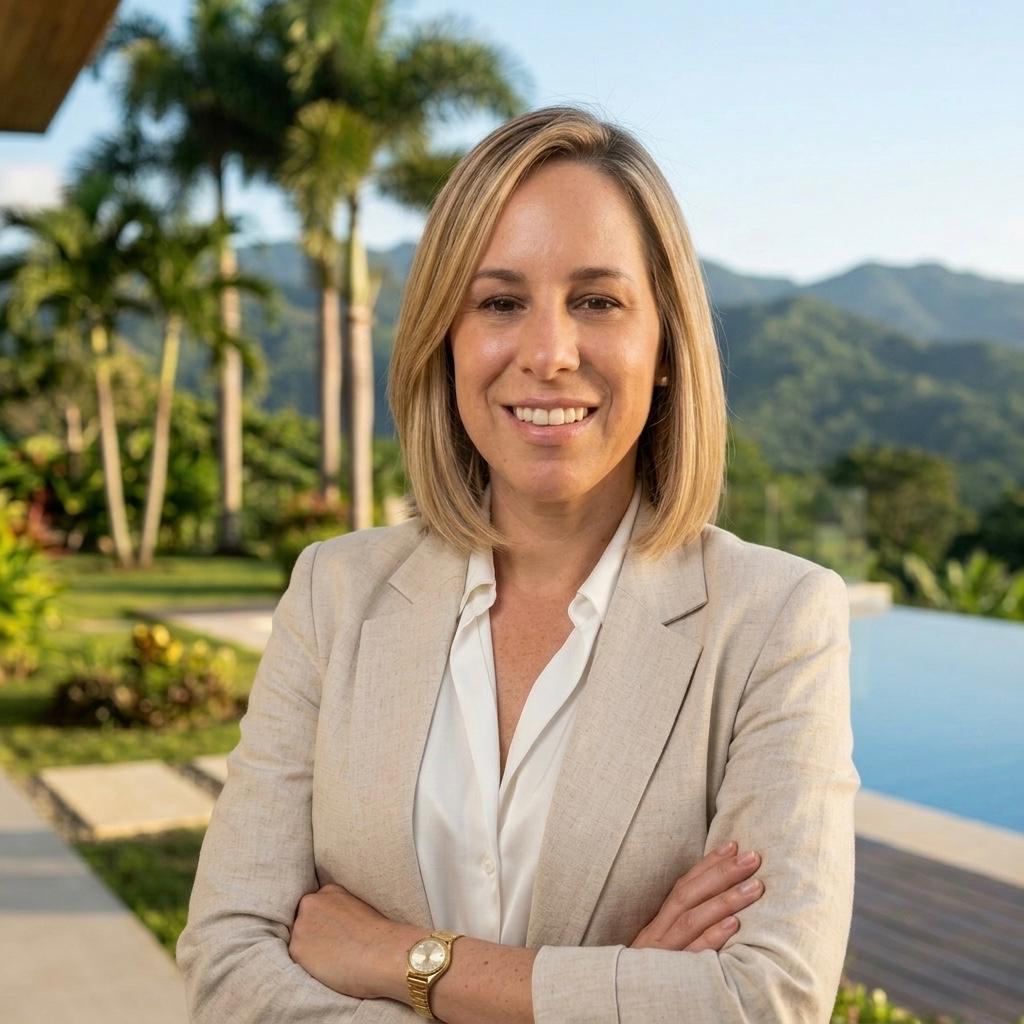
As a Costa Rican real estate professional and attorney, Mónica Monge combines real estate experience with a legal perspective, helping buyers understand not only the property itself, but also the legal and practical considerations involved in the transaction.
Frequently Asked Questions
Can foreigners buy houses in Costa Rica?
Yes. Foreigners can generally purchase titled private property in Costa Rica without becoming Costa Rican citizens or residents.
Can Americans own a house in Costa Rica?
Yes. U.S. citizens can generally own titled property in Costa Rica.
Do I need residency to buy property in Costa Rica?
No. Residency is generally not required to purchase titled property.
Can foreigners buy land in Costa Rica?
Yes, foreigners can generally purchase titled land, subject to applicable restrictions and the legal status of the specific property.
Can foreigners buy beachfront property?
Potentially, but coastal property requires careful review because the Maritime-Terrestrial Zone is subject to special laws and concession regulations. (Instituto Costarricense de Turismo)
Does buying property give me residency?
No. Purchasing property and obtaining immigration residency are separate matters.
Should I hire a Costa Rican lawyer before buying?
Yes. Independent legal due diligence is strongly recommended, particularly for foreign buyers who may not be familiar with Costa Rican property law and registration procedures.
Can I buy property through a corporation?
Yes, depending on the circumstances. Whether this is appropriate should be evaluated with qualified legal and tax professionals.
Final Thoughts
Yes, foreigners can buy property in Costa Rica. For most international buyers, the most important issue is not whether they are allowed to purchase, but whether they are purchasing the right property with a clear legal title and after proper due diligence.
Costa Rica offers outstanding opportunities for international real estate buyers, from luxury residences in secure gated communities to investment properties and coastal homes.
The key is to understand the property, the location, the legal structure and the transaction before committing your money.
Looking for property in Costa Rica?
If you are considering buying a home, investment property or luxury residence in Costa Rica, My Properties in Costa Ricahttp://www.mypropertiesincostarica.com can help you explore the market and connect you with the right property for your goals.
Contact us to begin your Costa Rica real estate search.
This article is provided for general informational purposes and should not be considered a substitute for individualized legal or tax advice. Costa Rican laws and regulations may change, and each real estate transaction should be reviewed according to its specific circumstances.


Comments